
How to Open and Scale a Ghost Kitchen Without Phantom Profit
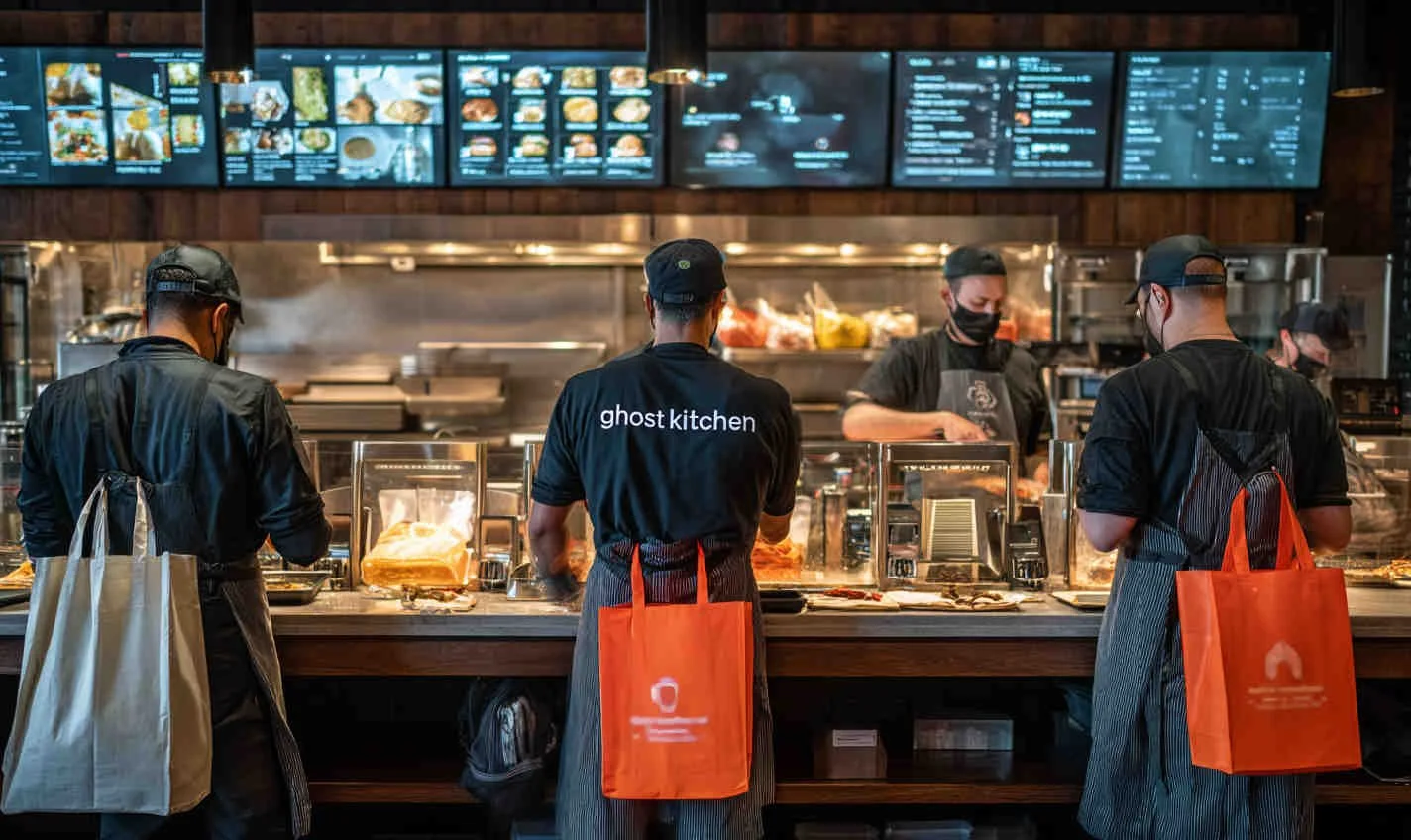
The CFO closes the laptop and looks around the room.
The board has just reviewed a quarter with record delivery sales. DoorDash volume is up 22%. Two new ghost kitchen hubs launched on schedule.
Then comes the question that changes the tone of the meeting:
“If demand is this strong, why are margins flat?”
This moment is increasingly common across the delivery-first restaurant economy. We have seen it inside PE-backed rollups, within QSR innovation teams, and among multi-brand operators who successfully cracked demand, but underestimated financial complexity. Launching a ghost kitchen is no longer the differentiator. Running one with clarity, discipline, and repeatability is.
This article is written for leaders who carry that responsibility:
The Multi-Brand Master running 3–5 virtual brands from a single kitchen hub
The PE-Backed Aggregator centralizing finance across acquired delivery-first concepts
The Corporate Offshoot inside a QSR deploying ghost kitchens to expand reach
If you are an Owner, CFO, or COO accountable for unit economics, capital efficiency, and scalable growth, the challenge is not demand—it is control.
The 2026 Ghost Kitchen Landscape: Real Growth, Real Pressure
Ghost kitchens have moved from experimentation to institutional strategy.
Global operators like Rebel Foods now run 45+ digital brands across multiple geographies. CloudKitchens and REEF continue to power hundreds of delivery-first concepts. On the enterprise side, Yum! Brands, Inspire Brands, and Bloomin’ Brands have all explored ghost or delivery-only extensions to test new cuisines, dayparts, and formats with limited capex.
The macro data reinforces this shift:
Based on recent forecasts from Statista, U.S. online food delivery revenue surpassed $130B in 2024 and is projected to grow 8–10% annually through 2026.
Research from McKinsey indicates that delivery platforms now account for 60%+ of off-premise orders for delivery-first brands.
According to the U.S. Bureau of Labor Statistics, labor costs increased 6–8% year-over-year in highly regulated states like CA, NY, and IL.
Current industry benchmarking and PE diligence data suggest that average ghost kitchen contribution margins have compressed to 8–15%, compared to high-teens margins reported by early adopters pre-2022.
These labor dynamics are increasingly influenced by policy changes, which is why many operators are reassessing staffing models and back-office support in response to trends outlined in How Immigration Policy Is Reshaping Restaurant Labor.
The opportunity is large, but so is the margin pressure. Scale magnifies both.
“How to Open a Ghost Kitchen” vs. How to Run One at Scale
Most guidance on how to open a ghost kitchen or how to start a ghost kitchen on DoorDash focuses on speed to launch:
Choose a concept
Secure licensed kitchen space
Activate DoorDash, Uber Eats, and Grubhub
Start fulfilling orders
That approach works well for pilots and early traction. It is how many brands—such as Nextbite, Wow Bao, and regional virtual brand operators—proved initial demand.
But once operators cross 10, 20, or 50 locations, a different reality sets in. Growth shifts from a marketing challenge to an operational one. What worked at three kitchens becomes fragile at scale. This is where well-capitalized groups separate themselves from those accumulating hidden risk.
Phantom Profit: When Volume Grows Faster Than Visibility
Phantom profit is the defining risk of delivery-first scale.
It shows up as:
Strong GMV on DoorDash and Uber Eats
Consistent daily deposits
Attractive top-line growth in board materials
Yet underneath:
Platform commissions vary by brand, market, and contract
Vendor pricing drifts across regions
Inventory execution varies by kitchen team
Labor inefficiencies hide inside blended averages
At this stage, many leadership teams realize traditional accounting views are insufficient and begin exploring more proactive financial models such as CAS accounting for restaurants to regain control.
PE-backed aggregators frequently encounter this gap during integration. Revenue consolidates quickly. Margin clarity does not. Profitability becomes a hypothesis rather than a fact.
Data Fragmentation: The Operational Tax No One Budgets For
As ghost kitchens scale, data fragmentation becomes an invisible tax.
Sales reports from delivery platforms rarely align perfectly with POS data. Vendor invoices arrive after product has already been sold. Bank deposits aggregate multiple brands and locations into single transactions. Finance teams spend their time reconciling rather than analyzing.
To relieve internal teams from this bottleneck, many operators centralize and delegate transactional workloads such as invoice entry and inventory updates—often leveraging approaches such as Outsourcing Data Entry Services to gain efficiency.
Operators like Fat Brands and Inspire Brands have publicly discussed the complexity of managing delivery-only revenue streams at scale. When leadership debates which report is “right,” momentum slows—and decision quality erodes.
Food Cost Visibility Without Going Down the Rabbit Hole
Food cost remains one of the most misunderstood variables in ghost kitchens.
As menus expand and brands multiply:
Execution variance increases
Substitutions become common
Waste and prep loss compound quietly
Many sophisticated operators treat this as its own strategic discipline. Leaders looking to explore this topic in depth often reference Actual vs. Theoretical Food Cost to understand how variance quietly compounds across brands and states.
For operators early in this journey, even a high-level benchmark using a Food Cost Calculator can surface early warning signs before expansion accelerates.
The key point here is visibility: without systemized tracking, food cost drift grows silently as locations and brands expand.
Why Spreadsheets Stop Working After 25–30 Locations
Spreadsheets feel efficient early. At scale, they become brittle.
They introduce:
Version-control issues across teams and regions
Delayed insight, often 2–4 weeks behind operations
Manual errors that compound month over month
No clear accountability by brand or location
As complexity increases, many food and beverage businesses reassess who should own financial operations—and how—often at the same moment they are forced to confront a deeper question: whether their current technology stack is actually built to support scale. This evolution mirrors trends seen among professionals rethinking scalable operating models in How to Become a Self-Employed Accountant, and among restaurant groups stepping back to design a more resilient, integrated tech foundation—starting with core systems like the POS, as explored in How to Choose the Best POS System for Your Restaurant.
Groups like REEF Kitchens and iKcon learned early that spreadsheet-driven finance cannot support multi-city ghost kitchen expansion. Governance requires systems, not workarounds.
The Strategic Shift: Creating a Single Version of Truth
High-performing ghost kitchen groups converge on one operating reality.
A true Single Version of Truth:
Consolidates sales from all delivery platforms
Aligns purchasing, inventory, and consumption
Produces consistent unit-level reporting
Surfaces exceptions instead of overwhelming teams with noise
This is the shift that allows CFOs and COOs to move from explaining variances to steering performance—especially in PE-backed environments where credibility with investors matters.
Prime Cost Control Without Micromanagement
In delivery-first models, prime cost determines survivability.
Best-in-class operators:
Monitor food and labor trends continuously
Identify margin erosion within days, not weeks
Tie purchasing decisions to real demand signals
Schedule labor based on actual order patterns
Brands like Chipotle, through its digital-only kitchens, and Sweetgreen, via delivery-heavy urban formats, have shown that disciplined cost visibility enables expansion without sacrificing margin integrity.
Why Restaurant365 Has Become Core Infrastructure
As ghost kitchen groups mature, Restaurant365 has become foundational for many multi-unit operators.
When implemented and supported correctly, it enables:
Unified reporting across brands and locations
Automated inventory, purchasing, and cost workflows
Timely P&L visibility
Vendor price tracking and variance detection
Clear accountability at the unit level
Increasingly, private equity firms expect this level of financial infrastructure before approving aggressive rollout or acquisition strategies.
AP Automation: The Quiet Lever That Changes Everything
Accounts Payable rarely draws attention—until it breaks.
Manual AP processes create:
Delayed cost recognition
Missed accruals
Vendor pricing blind spots
Volatile month-end closes
AP automation, particularly when processed overnight, changes the operating cadence. Invoices are captured, coded, and reflected in financials while teams sleep. Executives start the day with current data, not last month’s approximation—a meaningful advantage in fast-scaling delivery environments.
Scaling Across State Lines Raises the Stakes
For operators expanding into CA, NY, IL, and other regulated markets, complexity compounds quickly:
Wage and labor compliance
Paid leave mandates
Local tax and reporting requirements
Increased audit exposure
Fragmented systems struggle under scrutiny. Centralized, automated back-office infrastructure scales with confidence.
The Playbook Behind Scalable Ghost Kitchens
Across multi-brand hubs, PE-backed aggregators, and QSR offshoots, successful operators consistently share the same traits:
Integrated systems instead of tool sprawl
Consistent unit-level visibility
Centralized purchasing and AP workflows
Clear accountability by brand and location
They scale because they trust their numbers—and their ability to act on them.
A Final Word
After more than 13 years supporting restaurant groups through growth, acquisitions, and operational complexity, one pattern remains clear:
Ghost kitchens don’t fail because demand disappears.
They fail because the back office cannot keep pace with ambition.
Over Easy Office supports multi-brand operators, PE-backed aggregators, and QSR organizations as a specialized back-office partner, helping automate accounting, inventory, AP, and Restaurant365 operations—so leadership teams can scale delivery-first businesses with clarity, control, and confidence. Contact us today to streamline your restaurant's back office with expert support.